



Last month a streamer dropped $40,000 into a single online slot session and walked away with nothing. Twelve hours later, a guy playing a $0.20 spin on the same game hit a jackpot worth six figures. Neither outcome was magic, luck theft, or a rigged algorithm. It was variance doing exactly what variance does. If you want to survive in iGaming for more than a weekend, understanding that distinction is the whole ballgame.
Most players never bother to learn how the games actually work. They chase "hot" machines, blame cold decks, and treat random number generators like they have moods. They don't. What follows is a practical breakdown of slots, table games, poker, and sports betting from someone who has spent years watching both winners and losers, and noticing which habits separated them. For up-to-date information, visit slot dana.
Slots: The House Edge You Can Actually Calculate
Slots get dismissed as mindless, but they're the most misunderstood product in the entire industry. Every slot has two numbers that matter more than any theme, animation, or "megaways" gimmick: RTP (return to player) and volatility.
RTP is the percentage of all wagered money a game pays back over millions of spins. A 96% RTP slot keeps $4 for every $100 cycled through it, on average. That sounds brutal until you compare it to a 92% RTP machine, where the house keeps $8. Over a 1,000-spin session at $1 per spin, that difference is $40 — real money that vanished purely because you picked a worse game.
Volatility is the other half. High-volatility slots pay rarely but can pay enormously. Low-volatility slots pay frequently but in smaller amounts. Neither is "better." They suit different bankrolls and different temperaments.
- Low volatility (RTP 95-97%): frequent small wins, good for stretching a small bankroll over a long session.
- Medium volatility: the balanced middle ground most casual players prefer.
- High volatility: long dry spells, massive upside. Recommended only with a bankroll of at least 300-500 spins.
A concrete tip: before you spin a cent, check the game's help screen or paytable. Regulated operators in the UK, Malta, and most European markets are legally required to publish RTP. If a casino hides it, that's a red flag.
Table Games: Where Skill Actually Shrinks the Edge
Unlike slots, table games reward decisions. The house edge isn't fixed at the deal — it moves based on how you play.
Blackjack offers the clearest example. A player using basic strategy — the mathematically optimal decision for every hand — reduces the house edge to roughly 0.5%, sometimes lower depending on the rule set. A player guessing reduces it to 2% or worse. Same game, same cards, four times the bleed.
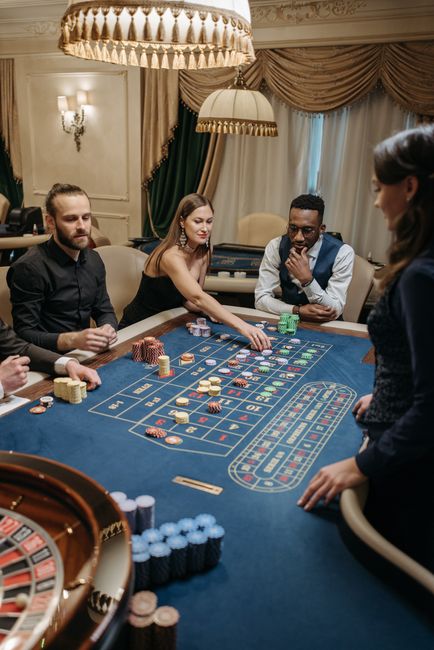
Roulette is simpler but no less revealing. European roulette has one zero, giving a 2.7% house edge. American roulette adds a second zero, pushing the edge to 5.26%. That single extra pocket nearly doubles the cost of playing. If you have the choice, always choose European. It's not close.
Baccarat, oddly, is one of the best bets on the floor for pure edge — the banker bet carries about a 1.06% house edge, assuming you skip the tie bet, which is a sucker's wager at around 14%. The tie bet looks tempting because it pays 8-to-1, but the math is merciless.
Poker: The One Game Where You Beat Players, Not the House
Poker is a different animal entirely. In slots and table games, you're fighting a built-in mathematical edge. In poker, the house takes a rake and then steps aside. Your profit comes from other players' mistakes.
That reframes everything. You're not trying to beat the deck — you're trying to identify who at the table is leaking money and extract it. Position matters more than cards. Patience matters more than aggression. Reading bet sizes tells you more than reading faces online, because timing tells and sizing patterns are harder to fake than expressions.
- Tighten your starting range in early position. Most beginners play far too many hands out of position and bleed chips slowly.
- Watch bet sizing across dozens of hands. A player who overbets the nuts and min-bets weak hands is a walking tell.
- Bankroll separate from gambling money. Poker is a skill game with variance. Treat it like a business, not a night out.
- Move down stakes when tilted. No hand is worth playing angry.
The real edge in poker is emotional. The player who folds a strong hand when the math says they're beat will out-earn the player who calls out of ego, every single time.
Sports Betting: Lines Are Information, Not Predictions
New bettors treat odds like forecasts. They're not. A line is a price, and prices reflect where the money is flowing plus the bookmaker's margin. A team at -150 doesn't mean they'll win; it means the book thinks the probability sits around 60%, and it's charging you extra for the privilege.
The vig — also called juice or margin — is the built-in tax. On a standard -110/-110 line, the book keeps about 4.5% regardless of outcome. That means you need a win rate above 52.4% just to break even. Fewer than one in twenty recreational bettors clear that bar long term.
Better bettors do three things:
- Shop multiple sportsbooks for the best price. A half-point difference on a spread is enormous over a season.
- Track every bet in a spreadsheet. Memory lies; data doesn't.
- Avoid parlays and same-game combos as default plays. They're fun, but they multiply the book's edge.
The Habits That Separate Winners From Tourists
After years around this industry, the patterns are boringly consistent. Successful players set limits before they log in, never after. They know the RTP of their favorite slots and the rules of their blackjack tables. They treat bonuses as math problems, not free money — reading wagering requirements carefully, since a 40x rollover on a $100 bonus demands $4,000 in bets before you can withdraw a cent.
They also understand that nothing is due. A slot that hasn't paid in 500 spins isn't "warming up." Cards don't remember the last hand. Each spin, each deal, each roll is independent.
The players who lose are the ones who believe the game owes them something. The ones who last are the ones who accept the math and play anyway, on their own terms, with money they can afford to lose.
Final Thought
iGaming isn't rigged against you — it's priced against you, openly and predictably. That's actually good news, because pricing can be understood, compared, and managed in ways that pure luck can't. Learn the RTP, respect the variance, hunt for value, and treat every session as entertainment with a known cost. Do that, and you'll be the rare player who walks away without a story about how the machine "stole" your money.